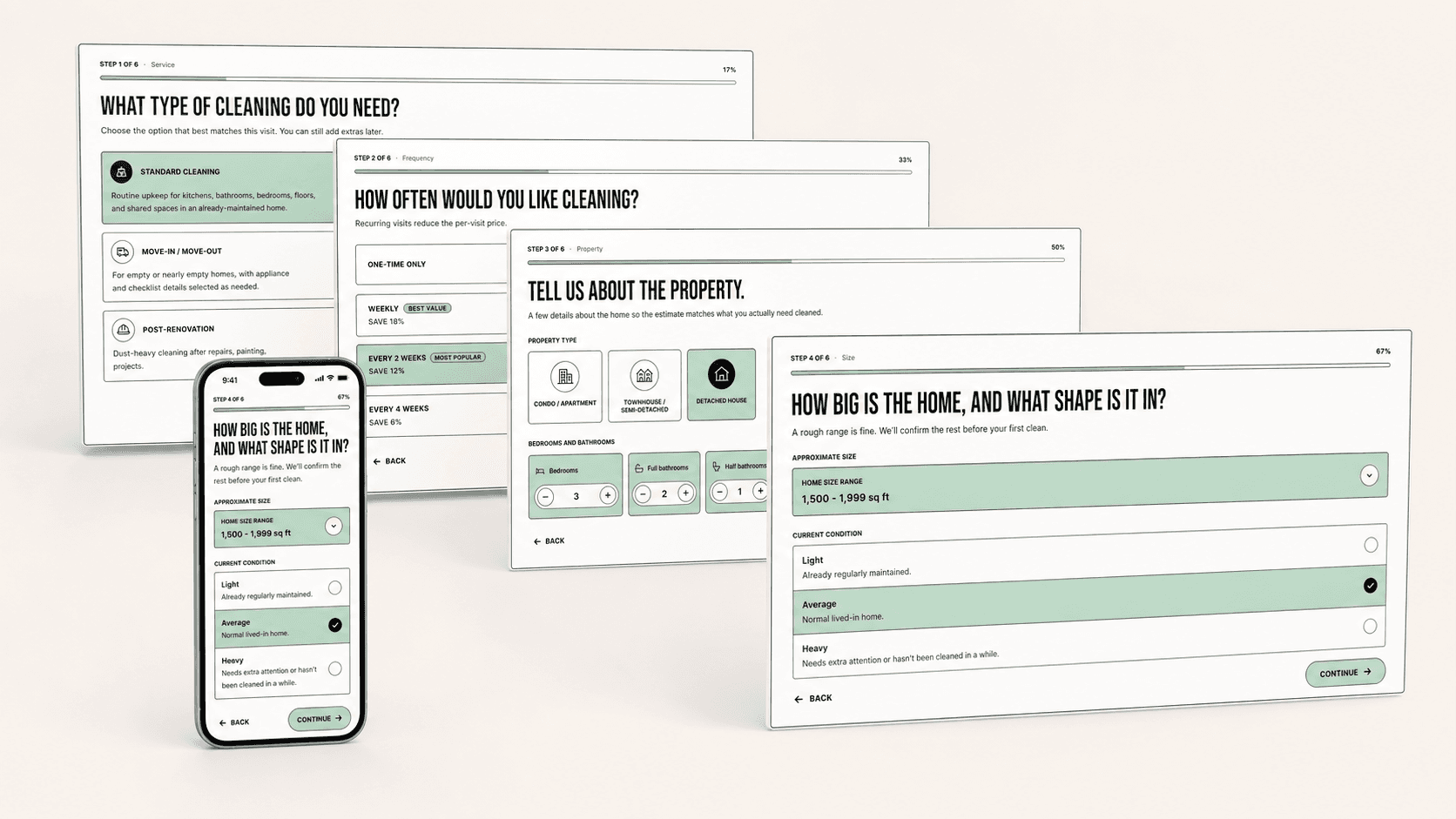
When "how much for a clean?" still leaves too much to quote.
See how a house-cleaning SmartQuote turns a loose price request into usable scope, controlled price direction, and a clear next step, with review, handoff, and follow-up attached.
The form captures the lead. The quote path protects the job.
A homeowner may think they asked for a price, but the team still has to sort clean type, home condition, add-ons, frequency, risk, and follow-up. If those basics happen after submit, the business already looks slower than the cleaner who gave useful direction first.
The walkthrough below shows how the request can keep moving without pretending every cleaning job should get an instant final price.
Capture clean type, condition, add-ons, and frequency before the homeowner expects a firm answer.
Let clean type decide the path instead of forcing every inquiry through one form.
Give controlled range, booking, callback, photo, or review direction before the lead goes quiet.
Keep follow-up tied to quote status, not whoever remembers to check back.
Focused implementation
A focused first version that fits what you already use.
Start with the quote request that matters most, then expand after the first path is working.
Included
One SmartQuote path, clear team handoff, simple follow-up, and launch checks.
Tool fit
Works with HighLevel or fits around your current CRM, inbox, and admin process.
Timing
Usually 3–4 weeks once pricing, content, and account access are ready.
Quoted separately
Website rebuilds, CRM migrations, extra paths, and complex automation.
01Quote-ready request
Make the cleaning request quote-ready before the callback
A loose "how much for a clean?" request can feel complete to the homeowner, but it still leaves the business chasing clean type, home size, condition, timing, frequency, and add-ons after they already expect a price. SmartQuote collects those labor drivers while the homeowner is still engaged, so the first reply starts from usable scope instead of basic questions.
Your team can price from cleaning context, not a short note that makes you look slower than the next cleaner.
02Job routing
Separate simple cleans from jobs that need judgment
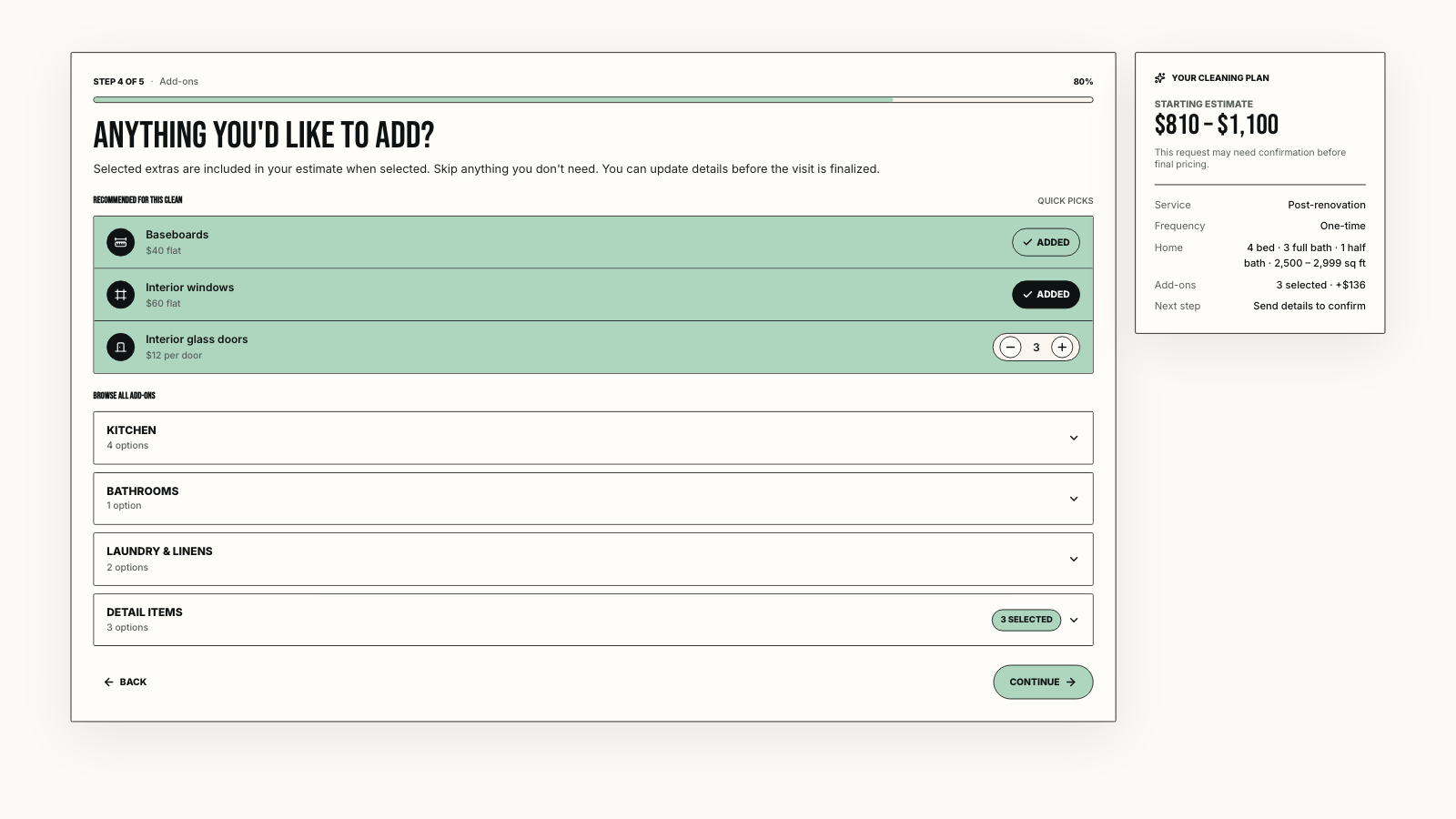
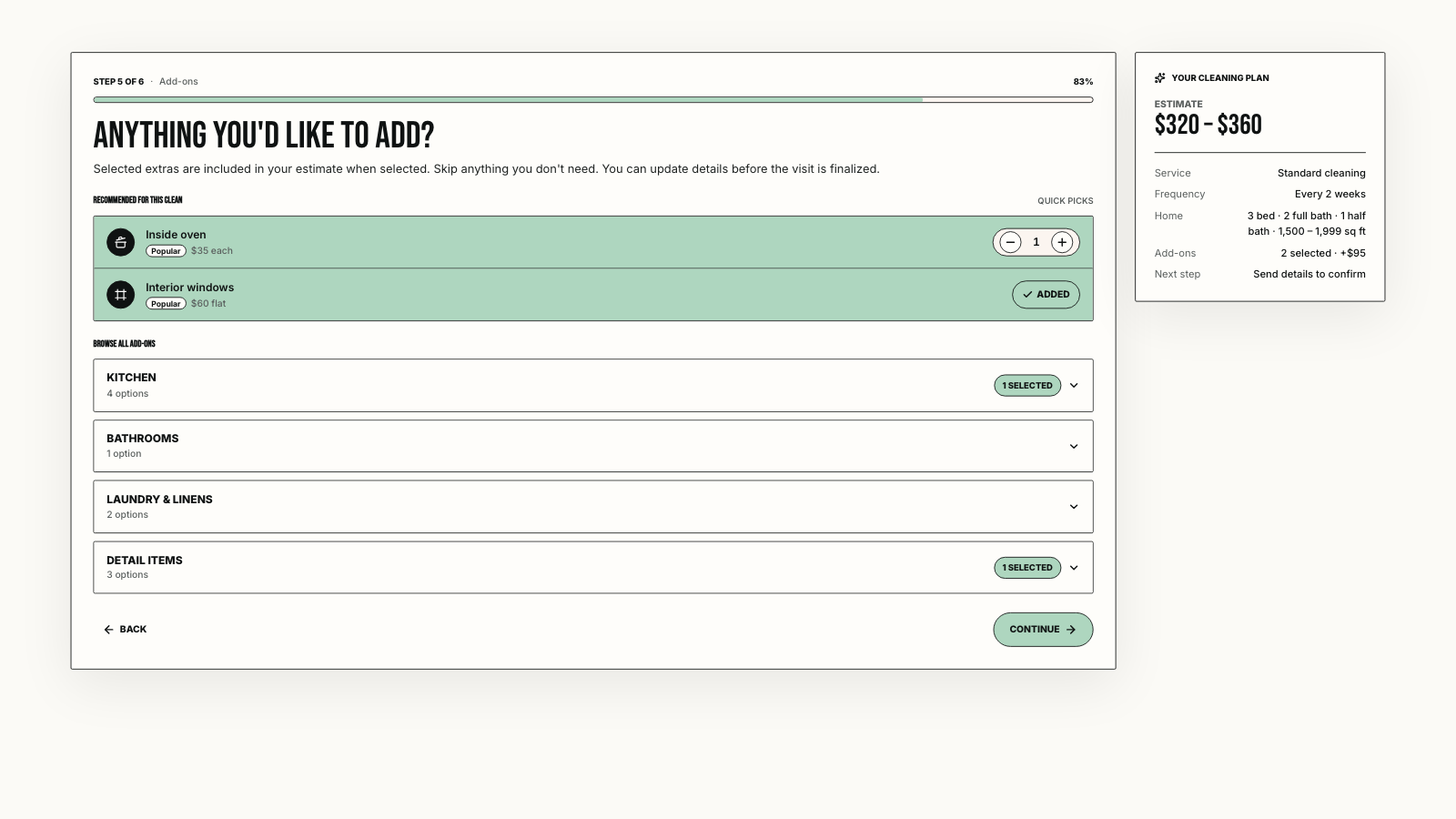
A recurring maintenance clean, first-time deep clean, move-out, and heavy-condition home should not all enter the same path. When a basic form treats them alike, the owner has to sort risk by hand after the lead arrives. SmartQuote changes questions, add-ons, price logic, review, callback, or photo paths based on the job.
Simple cleans keep moving, while judgment-heavy jobs pause before the business overpromises.
Standard clean add-onsPost-renovation add-ons
House cleaning SmartQuote routing view showing how different job types can follow different paths.
03Price protection
Give a useful range without forcing a bad final quote
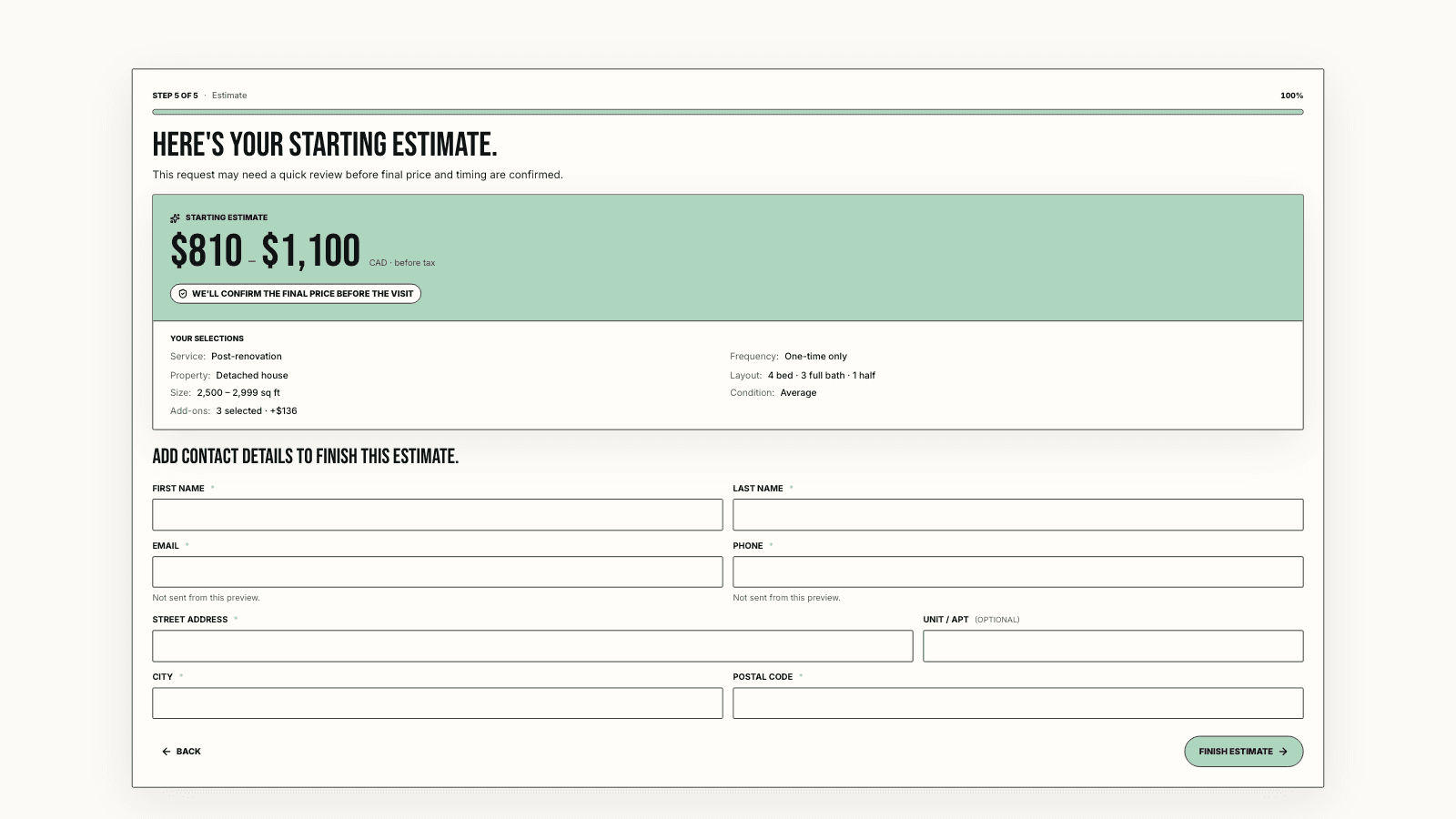
The owner is stuck between two bad options: give no price and lose momentum, or show a number before condition and add-ons are clear and defend it later. SmartQuote uses a range, starting point, or package direction for clearer requests while deep cleans, move-outs, heavy-condition homes, and add-on-heavy jobs can route to photos, callback, or review before final confirmation.
The homeowner gets price direction without turning a risky estimate into a final promise.
House cleaning SmartQuote contact details screen showing a starting estimate held for review before final price confirmation.
04Customer next step
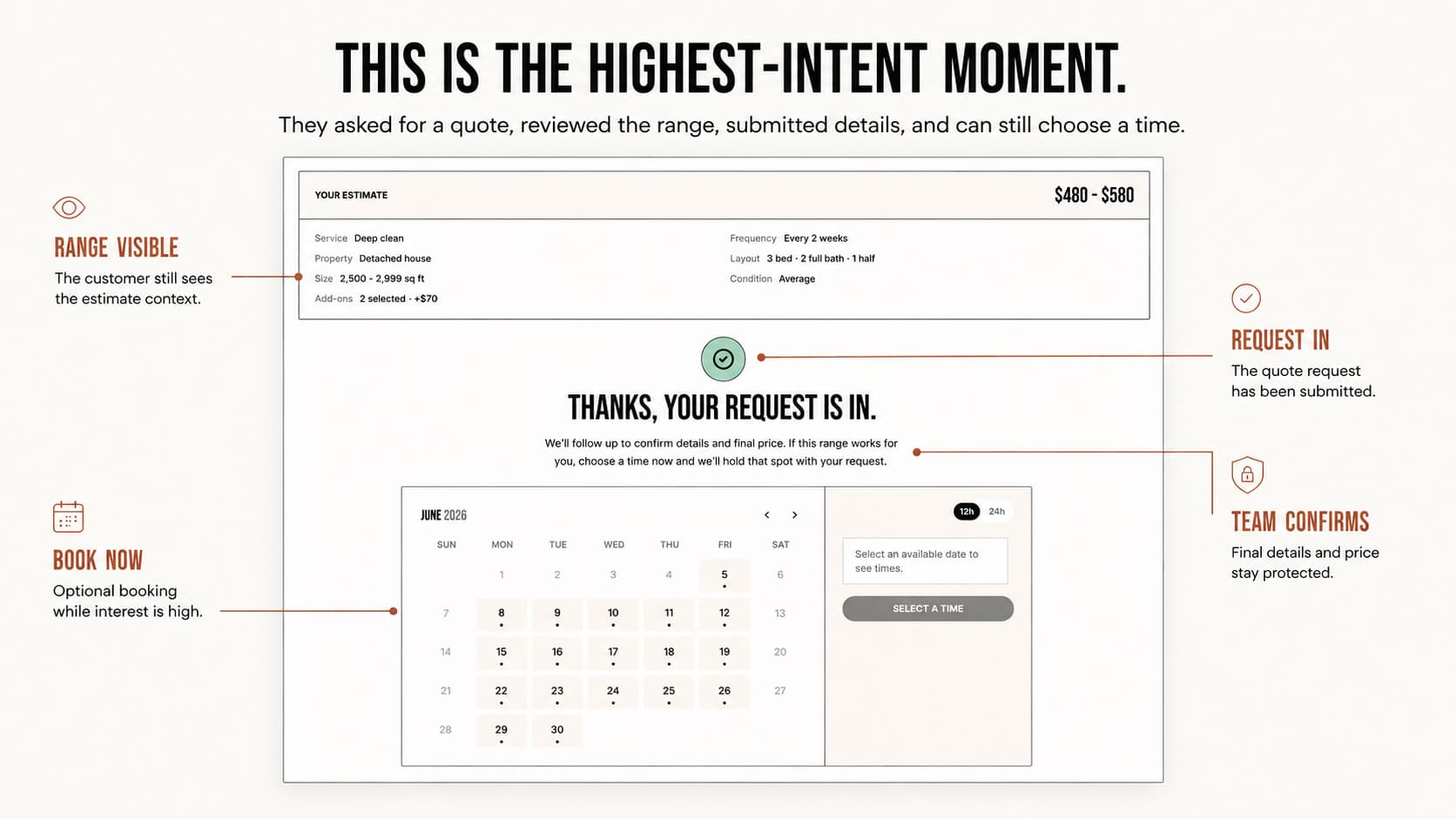
Do not end high-intent requests with "we'll be in touch"
After the homeowner sees price direction, the warmest moment in the quote path should not end with a silent thank-you page. The final screen can offer booking, callback, photos, or review status so ready requests keep moving and risky jobs still have a clear next step.
Intent stays active instead of cooling off while the homeowner compares cleaners.
05Team handoff
Hand off the job before someone has to decode it
If the team only gets a short form note, someone still has to decode the real cleaning scope after the homeowner already went through the flow. The handoff carries clean type, frequency, home details, condition, add-ons, range shown, review reason, customer preference, source, and next action in one place.
The team can continue the quote instead of restarting the sale from scratch.
SmartQuote handoff
Ready for team review
Customer
Customer:
Maya R.
Source:
Website
Received:
Today, 10:18 AM
Preference:
Callback preferred
Request
Service:
Deep clean
Home:
3 bed / 2 full bath / 1 half
Condition:
Heavy
Add-ons:
Oven / baseboards / fridge
Estimate path:
Starting estimate
Range shown:
$820 - $1,100
Team action
Status:
Needs review
Reason:
Heavy condition + add-ons
Owner:
James M.
Next action:
Review before final price
Due:
Today, 2:30 PM
What changed the request
Customer selected heavy condition and multiple add-ons. Confirm final price before visit.
Route reason attachedNext action clearFits current tools
06Follow-up
Follow up based on what the quote still needs
A cleaning quote is not done just because a range was shown. Range viewed, photos needed, callback requested, review pending, recurring option offered, and booking unfinished are different open loops. SmartQuote follow-up keeps the next action tied to quote status instead of someone remembering at the right time.
Warm cleaning quotes stay visible until they are booked, reviewed, or followed up.
Scattered follow-up
No single status or owner.
Deep clean price requestInbox
Unknown number · 11:42 AMMissed call
Name + phone + short noteWebsite form
Call back laterReminder note
Status unclear
VS
SmartQuote follow-up
Status-based follow-up
AutomatedEmailWe received your house cleaning requestDelivered
AutomatedEmailYour cleaning estimate range is readyDelivered·Opened
AutomatedSMSCan you send photos before we confirm?Sent
AutomatedEmailChoose a callback time for your quoteQueued
CustomerSMSI can send photos tonightReplied
After the example
Where a basic cleaning quote form loses the job
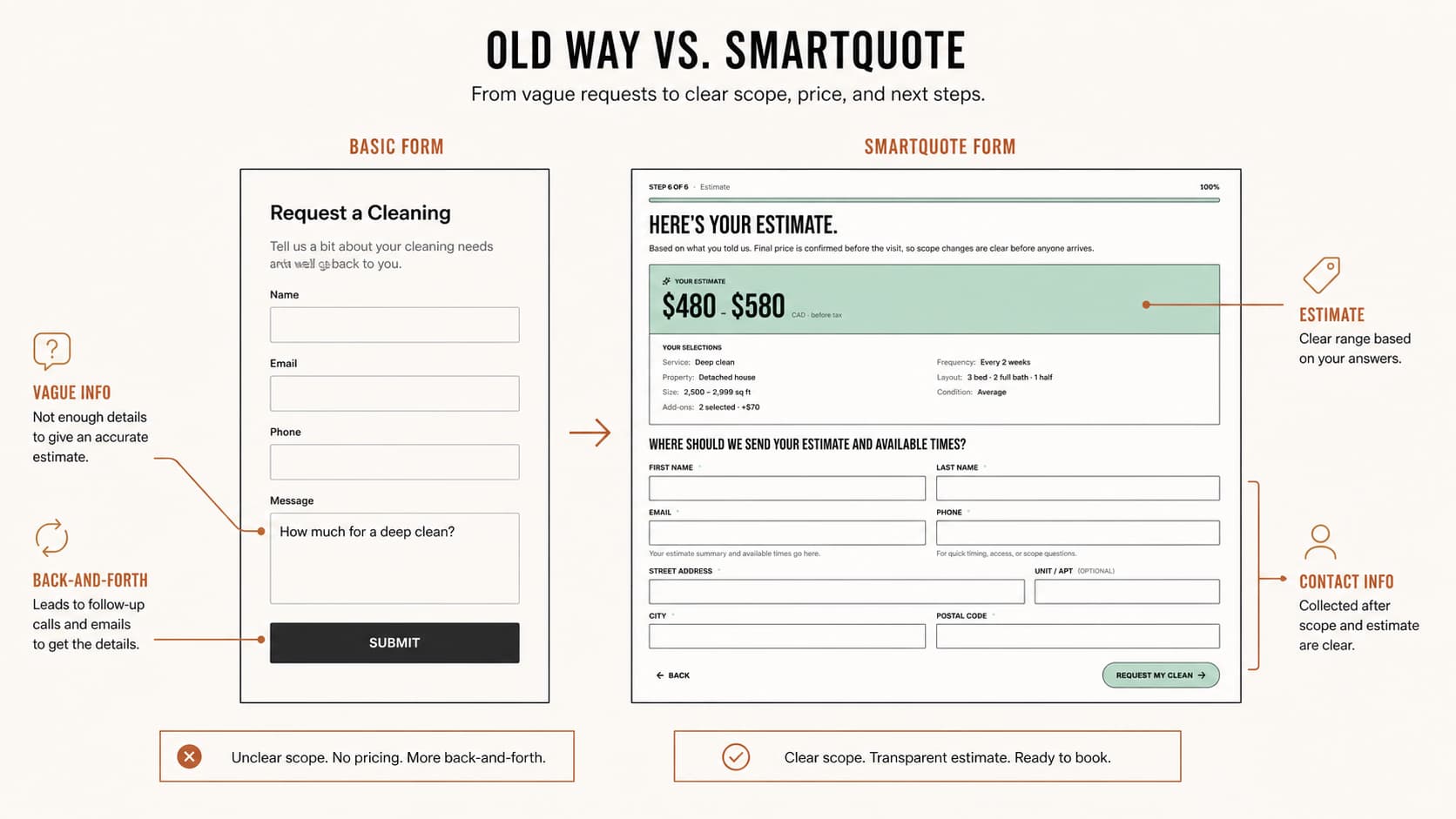
A normal form does not fail because it captures nothing. It fails because it captures interest without resolving what the homeowner needs next.
SmartQuote bridges the gap between inquiry captured and job moving: scope, price direction, review or callback where needed, handoff, and follow-up status.
Where the normal form leaks:Normal formSmartQuote path
01
Vague request
Normal form
Name, phone, email, and "How much for a clean?" arrive, but the real labor drivers are still missing.
SmartQuote path
Clean type, home details, condition, frequency, and add-ons are captured before the team has to chase them.
02
Generic path
Normal form
Standard clean, recurring clean, deep clean, move-out, and heavy-condition homes all land in the same queue.
SmartQuote path
Questions, add-ons, range logic, review, callback, or photo needs change by clean type and condition.
03
Waiting point
Normal form
The homeowner submits, gets little direction, and keeps comparing while the team decides what to ask next.
SmartQuote path
The request moves toward controlled range, booking, callback, photos, review status, handoff, or follow-up.
This fits before Jobber, BookingKoala, Housecall Pro, HighLevel, email, or your admin process. SmartQuote sends a clearer cleaning record into the process your team already uses, with clean type, condition, add-ons, and the next action already attached.
Questions this example answers
01Can a house cleaning SmartQuote give a final price online?
A house cleaning SmartQuote can show a useful range, starting point, or package direction for clear requests. Deep cleans, move-out cleans, post-renovation jobs, heavy-condition homes, and add-on-heavy requests can still route to photos, callback, or human review before final confirmation.
02Does this replace Jobber, BookingKoala, Housecall Pro, or HighLevel?
No. The SmartQuote path fits before or around the tools a cleaning company already uses. Its job is to make the first request clearer, route the next action, and hand off cleaning context before the lead reaches the CRM, booking tool, inbox, or admin process.
03What happens after the homeowner submits the request?
The request should move to a visible next step: booking, callback, photo request, human review, or status-based follow-up. That avoids a silent thank-you page at the exact moment the homeowner still needs price clarity, timing, or reassurance.
04Why ask frequency, condition, and add-ons early?
Frequency, home condition, clean type, and add-ons change labor, margin, schedule fit, and quote risk. Asking those details while the homeowner is still engaged helps the business separate a standard clean from a recurring, deep, move-out, or review-needed job.
Review the quote path
Show us your cleaning quote path. We’ll point out where requests slow down.
We’ll map what should be captured before price direction, what should trigger review, callback, or photos, and which quote statuses need follow-up after the range.